Rules

Everything
In Writing

Classifications, divisions, time limits and policies.
All ages are determined as of January 1 2027.

Classifications

Where Your Dancers Compete

Routines are entered by skill classification as well as age.

Novice

  • Solo — A dancer who has never competed in a solo category of any dance genre.
  • Duet / Trio — Dancers who have never competed in a solo or duet/trio in any dance genre. All dancers in the routine must be 100% novice.
  • Groups — The routine must consist of a minimum of 75% novices.
Part-Time

  • Solo — A dancer who has never competed in a competitive solo category and trains 6 hours per week or less.
  • Duet / Trio — Dancers who have never competed in a competitive solo or duet/trio category and who train 6 hours per week or less. All dancers in the routine must be 100% part-time.
  • Groups — The routine must consist of minimum of 75% part-time.

Competitive

Any dancer who trains more than 6 hours per week.

Professional

  • Any dancer 19 years or older receives financial compensation from instructing, choreographing, or performing in the dance industry.
  • Any routine that includes a professional dancer must compete in the Professional classification.

Age Divisions

Five Age Bands

A dancer's age is determined as of January 1, 2027.

Mini

9 and under

Junior

10 – 12

Intermediate

13-15

Senior

16-18

Adult

19 and over

Entry Categories

Sizes and Time Limits

A 15-second grace period in allowed for each routine. Time and classification limitations will be strictly enforced.

Category Dancers Time Limit
Solo 1 dancer 2:45
Duet / Trio 2 – 3 dancers 2:45
Small Group 9 dancers or less 3:30
Large Group 10 – 14 dancers 3:30
Line 15 – 20 dancers 4:00
Extended Line 21 – 29 dancers 5:00
Production 30 dancers or more —

Performance Divisions

Ten Styles

Acrobatic trick limits apply per division, as noted.

Acro

A fusion of dance and acrobatic tricks. Flexibility and power blended seamlessly with dance movement.

Lyrical

A combination of jazz and ballet techniques to slow music, incorporating emotional and storytelling elements.

Maximum 4 Acro Tricks

Ballet

Ballet or pointe technique, including classical variations.

No Acro Tricks

Jazz

Primarily jazz technique, using up-tempo music.

Maximum 4 Acro Tricks

Tap

Primarily tap technique. Routines demonstrating clogging technique and style may not compete in the tap category.

No Acro Tricks

Contemporary

A fusion of many dance techniques with a strong emphasis on modern technique.

Maximum 4 Acro Tricks

Musical Theatre

Any routine interpreting a Broadway or movie soundtrack.

Maximum 6 Acro Tricks

Open

A routine that does not fit the definition of an existing category.

Maximum 8 Acro Tricks

Hip Hop

Primarily hip hop technique

Maximum 3 Acro Tricks

Pointe

Classical steps and movements done en pointe

No Acro Tricks

Event Policies

The Long Version.

Tap any section to open it.

Music

All music may be uploaded through DanceBug. Audio files are recommended in MP3 form, up to 50MB each. All music must be appropriate for all audience members and refrain from using offensive language or derogatory terms.

Judges' Feedback

Within one week of each event, the judges’ critiques will be available to studio directors through DanceBug.

Video And Photography

Videotaping and photography are strictly prohibited during the entire event. All participating dancers authorize the use of their image in photos and video for Niagara International Dance Collective publicity and advertisement purposes. Photos of the event will be available for purchase on DanceBug.

Props

No dangerous props may be used during the competition. General prop set-up cannot exceed the length of the piece. It is the sole responsibility of each studio to ensure that its props are taken on and off stage. The use of paint, glitter, water or powder is not allowed. If you have a routine using something you believe may be an issue, please contact NIDC ahead of time.

Scheduling

NIDC reserves the right to cancel, add or subtract days. Space is limited and studios are accepted on a first come, first served basis. A tentative and final schedule will be sent to each studio prior to the competition date. Changes received after the schedule has been sent out will not be reflected in the program. Dancers and routines must be performed in the order listed in the final schedule unless approved by the NIDC directors. Performing out of the category will result in omission from overall awards.

Conduct

Anyone attending an NIDC event is expected to conduct themselves in a respectful and responsible manner. We request that studios help maintain a clear backstage area, free from parents and dancers not performing in the competition. All participants are responsible for cleaning their area and properly disposing of garbage. Please be advised that studios will be held responsible for any damages to the venue.

Competitive Requirements

Each competitor may only compete with one studio. Competitors may not compete against themselves. Performers should be ready to perform 60 minutes prior to their scheduled time, should the competition be running ahead of schedule. All routines must report to the backstage manager 5 routines prior to their onstage slot. Any dancer that did not complete their routine will be allowed to re-dance and be re-scored at the discretion of the NIDC staff.

Liability

Niagara International Dance Collective is not responsible for injuries sustained while in attendance or participating in one of our events. NIDC is not responsible for lost or stolen property.

Sheraton Fallsview

The Host Hotel

Sheraton Fallsview

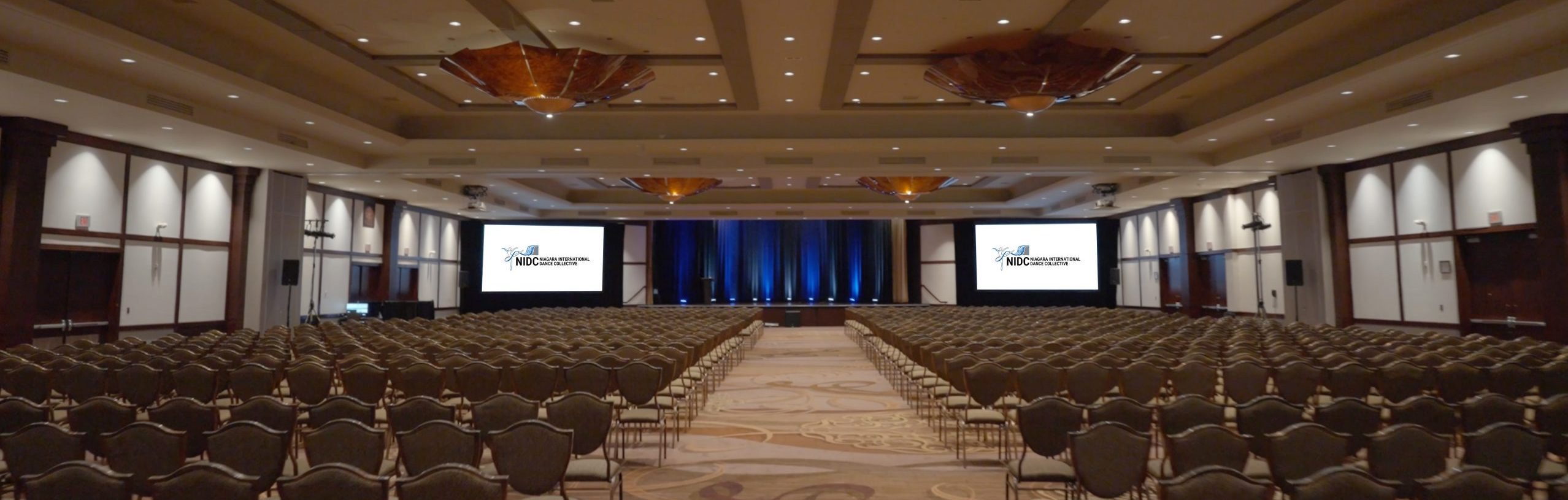
Weekend is staged inside the Sheraton Fallsview, overlooking the falls — the competition floor, the dressing rooms and your studio's beds all under one roof.

Visit The Sheraton Fallsview